
Caitlin Clark has become one of the biggest stars in the WNBA, but with enormous popularity comes an equally enormous level of scrutiny that follows almost everything she does on a basketball court.
Every spectacular three-pointer can become a viral highlight, while every missed shot, turnover, defensive mistake, or questionable decision can quickly become the subject of debate across television, podcasts, social media, and basketball communities.
In many ways, that is completely normal for a superstar.
The biggest athletes in professional sports have always faced intense criticism because the public pays closer attention to their performances, expectations are higher, and their names naturally generate more discussion.
But an increasingly important question is emerging around Clark and WNBA coverage.
Is she simply experiencing the normal scrutiny that accompanies superstardom, or are media members and analysts applying standards to Clark that they are sometimes reluctant to apply to other players?
That distinction matters because criticism itself is not the problem.
Clark should absolutely be criticized when the criticism is based on basketball.
If she makes a poor pass during an important possession, analysts should explain what went wrong.
If she forces a difficult shot when a teammate is open, that decision should be discussed.
If Clark struggles defensively against a particular matchup, analysts should be able to identify the problem and explain how the opposing team exploited it.
If she commits costly turnovers late in a game, those turnovers should become part of the analysis.
Nobody should argue that Clark is above legitimate criticism simply because she is extremely popular.
That is not how professional sports operate.
LeBron James, Tom Brady, and countless other superstar athletes have spent years facing intense analysis whenever they succeed or fail.
The bigger the athlete becomes, the larger the microscope generally becomes.
However, the controversy surrounding WNBA coverage is not necessarily about whether Clark should receive criticism.
The more complicated question concerns whether similar standards are consistently applied across the league.
If turnovers become an important measurement when evaluating Clark, turnovers should also matter when another star guard is being evaluated.
If shooting efficiency becomes central to an MVP discussion involving Clark, analysts should not suddenly abandon efficiency when discussing another MVP candidate.
If defensive performance is considered a weakness for one guard, the same category should remain relevant when another guard struggles with similar problems.
Consistency is what transforms criticism into credible sports analysis.
Without consistency, audiences can begin wondering whether conclusions are being shaped by personalities, popularity, relationships, or predetermined narratives rather than what actually happens during games.
One argument presented in the discussion surrounding WNBA media coverage is that analysts appear particularly comfortable criticizing Clark and, in some cases, Angel Reese while approaching other prominent players more carefully.
Whether every viewer agrees with that assessment is another matter, but the underlying principle deserves serious consideration.
A healthy professional sports ecosystem cannot function if criticism is treated automatically as hatred.
Analysts should be able to identify weaknesses while still respecting the player.
Fans should be able to question decisions without attacking someone personally.
And media members should be able to acknowledge poor performances without pretending that one bad night defines an athlete’s entire career.
That is what happens throughout established professional sports.
A superstar can have a terrible shooting night.
A rookie can struggle against a difficult matchup.
A veteran can make a costly mistake.
A coach can choose a questionable rotation.
An entire team can collapse during the fourth quarter.
All of those situations should be available for discussion.
That is sports analysis, not personal hostility.
The challenge with Clark is that her extraordinary popularity creates an unusual media environment in which almost anything involving her generates significant attention.
Her name attracts viewers.
Her highlights attract engagement.
Her performances generate arguments.
Stories involving Clark can spread rapidly across social media, regardless of whether those stories are positive or negative.
That means Clark will naturally receive more coverage than many WNBA players.
More coverage, however, does not automatically prove unfair treatment.
The better question is what that coverage actually contains.
There is an enormous difference between saying Clark struggled defensively during a particular game and declaring that she is simply a terrible basketball player.
The first statement can potentially be supported by game film, statistics, specific possessions, and matchup analysis.
The second is an enormous conclusion requiring far more evidence.
The same principle should apply to every star.
A’ja Wilson can have a poor performance without suddenly becoming a poor basketball player.
Paige Bueckers can struggle against a particular defensive scheme without that performance becoming evidence that her career is somehow in trouble.
Kelsey Mitchell can deliver an incredible scoring performance without that achievement automatically becoming ammunition in another Clark-centered argument.
Basketball players are neither perfect nor terrible based on one possession or one game.
They have strengths and weaknesses.
They experience favorable and difficult matchups.
They have brilliant nights and frustrating nights.
Sometimes even great players simply do not perform at the level everyone expects.
Real analysis acknowledges that complexity.
Social media frequently does the opposite.
Online conversations often reward the simplest possible narratives because heroes and villains are easier to promote than complicated basketball explanations.
Clark has become one of the most visible players trapped inside that environment.
When someone praises her, critics can immediately accuse that person of being biased.
When someone criticizes her, supporters can immediately assume the analyst has an agenda against her.
Eventually, the original basketball discussion disappears.
Instead of debating shot selection, defensive coverages, turnovers, passing decisions or coaching strategy, people begin debating the motives of everyone participating in the conversation.
That environment makes legitimate criticism increasingly difficult to separate from personal attacks.
It also makes reasonable praise harder to distinguish from fandom.
A healthier approach would allow someone to support Clark while acknowledging when she makes a mistake.
The same person should be capable of respecting Wilson while discussing a poor performance.
A Bueckers supporter should be comfortable identifying areas where she can improve. 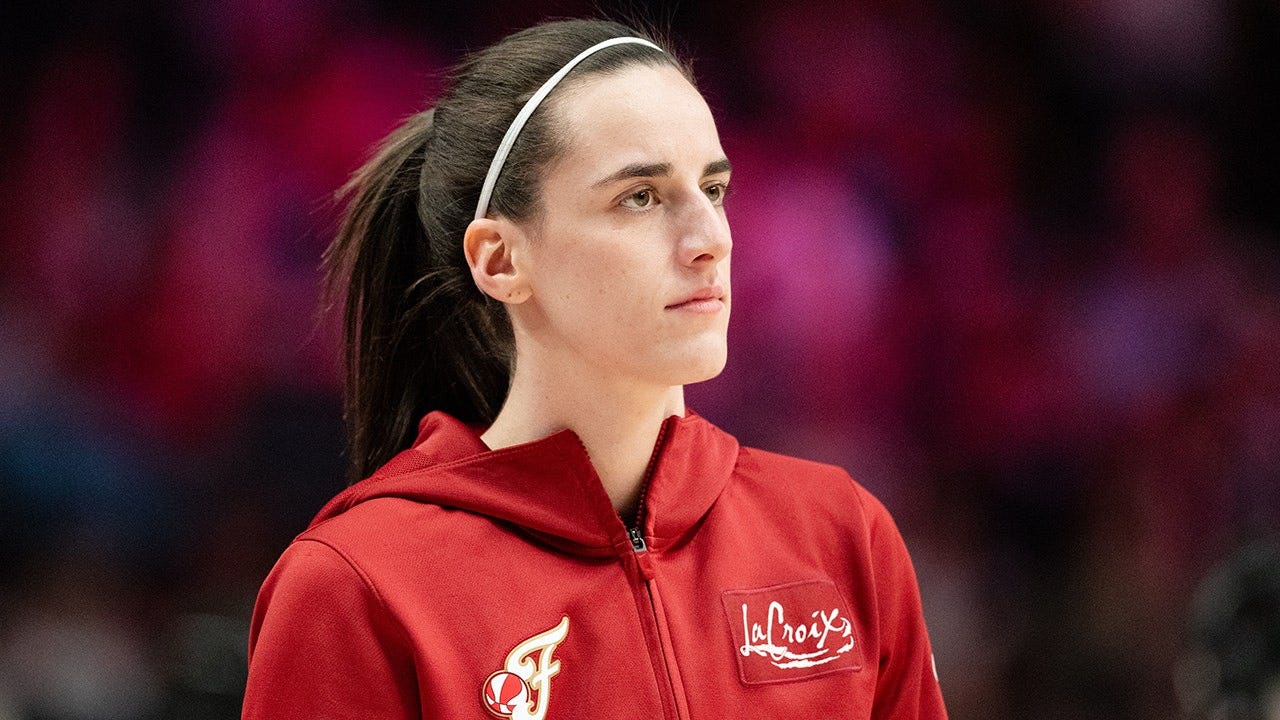
Fans should also be able to celebrate a brilliant Mitchell performance without transforming it into another argument about whether she is better or more important than Clark.
There does not always need to be a battle.
Sometimes a player simply performs brilliantly.
Sometimes a player struggles.
Sometimes the coach makes the correct decision.
Sometimes the coach gets it wrong.
That unpredictability is one of the reasons people watch sports.
As the WNBA continues attracting more attention, these conversations are likely to become louder rather than quieter.
New fans arrive with experience following the NBA, NFL, college basketball and other major competitions where debate is deeply embedded in sports culture.
They want to discuss MVP races.
They want to compare stars.
They want to question coaching decisions.
They want to understand why one team won and another lost.
They want to debate playoff possibilities and determine whether players are meeting expectations.
That does not automatically represent negativity.
In many cases, it represents investment.
When fans care enough about a league to spend hours debating performances, statistics, rotations and championship possibilities, they are demonstrating that the competition matters to them.
But increased attention creates responsibilities as well.
Not everything described as criticism deserves to be considered legitimate analysis.
Sometimes people use a basketball mistake as an excuse to attack a player personally.
Sometimes one bad possession becomes the foundation for an absurd conclusion about an athlete’s entire career.
Sometimes an ordinary disagreement about basketball becomes a personal feud between fan communities.
That is not serious analysis.
The answer is not eliminating criticism.
The answer is improving it.
Show the possession.
Explain the decision.
Use statistics when those statistics provide meaningful context.
Compare similar situations using similar standards.
Separate confirmed facts from opinions.
Most importantly, remain consistent.
Clark’s popularity makes those standards especially important because everything surrounding her can become amplified.
A spectacular pass can spread across social media within minutes.
A terrible turnover can do exactly the same thing.
A huge scoring performance can dominate basketball conversation.
A poor shooting performance can generate an equally enormous reaction.
That is the reality of superstardom.
The larger the audience becomes, the more opinions an athlete will encounter.
But media organizations and content creators also have responsibilities within that environment.
There is a difference between covering a genuine basketball development and manufacturing outrage because controversy generates engagement.
That challenge applies to both traditional and independent media.
Independent creators often possess greater freedom to express direct opinions because they are not operating inside traditional broadcasting structures.
That freedom can create passionate and valuable basketball analysis.
It can also create incentives for exaggeration because controversial headlines and extreme opinions often generate greater engagement.
Traditional media faces a different challenge.
Broadcasters frequently develop professional relationships with players, coaches, teams and league officials.
Those relationships can provide valuable information and access.
At the same time, some fans may wonder whether those relationships make commentators more cautious when discussing people they regularly encounter professionally.
Neither independent media nor traditional media should automatically receive complete trust.
Credibility must be earned.
Can an analyst support an argument with evidence?
Can that person clearly separate facts from opinions?
Can the analyst admit when an earlier prediction was wrong?
Can someone criticize a player they personally admire?
Can they praise an athlete they have previously criticized?
Those qualities are far more important than the platform delivering the opinion.
The conversation involving Clark and Mitchell provides an interesting example.
When two elite players perform at a high level, comparisons are inevitable.
Some fans will prioritize scoring.
Others will value playmaking.
Some will emphasize defense.
Others will focus heavily on efficiency, playoff performance, or overall statistical production.
Those disagreements can be healthy.
Fans do not need to reach the same conclusion.
They simply need to explain the reasoning behind their conclusions.
That is the difference between a basketball debate and an online fight.
Once every disagreement becomes personal, the basketball itself becomes secondary.
Consider what happens after a major Fever game.
One viewer might argue that Clark was outstanding.
Another might point toward her turnovers.
Someone could focus on her passing.
Another person might criticize her defense.
Someone else might blame the coaching staff for a late-game decision.
Another viewer might highlight shooting efficiency.
Those are all potentially legitimate basketball conversations.
The problem begins when people abandon the game and start attacking each other.
As the WNBA audience expands, maintaining that distinction becomes increasingly important.
New viewers are discovering teams and players.
They are learning rivalries.
They are following standings and highlights.
They are deciding which teams to support and which analysts they trust.
Trust is particularly important in sports media.
Once viewers become convinced that an analyst has a predetermined agenda, everything that person says can become filtered through that perception.
Even accurate observations might be dismissed.
Legitimate criticism can suddenly be interpreted as an attack.
That is why consistency is so valuable.
Every player does not require identical coverage because every player does not generate identical public interest.
But the underlying analytical standards should remain recognizable.
If the discussion concerns defense, evaluate defense.
If the discussion concerns shooting, evaluate shooting.
If turnovers matter, evaluate turnovers.
If leadership is being discussed, clearly explain what leadership means in that particular context.
The criteria should not suddenly change simply because the name on the jersey changes.
At the same time, an athlete should not become a convenient target simply because criticism of that player generates clicks.
Responsible sports coverage should aim for strong evidence, appropriate context, fair criticism, and enough intellectual honesty to acknowledge when an argument does not survive closer examination.
Clark does not need every analyst to praise her.
She does not need every commentator to defend her.
And serious basketball coverage certainly does not require pretending that she never makes mistakes.
What Clark deserves is fundamentally the same thing every professional athlete deserves: evaluation based primarily on what happens on the basketball court.
When Clark dominates, acknowledge it.
When she struggles, explain why.
When Mitchell takes over a game, recognize her performance without automatically turning the discussion into a comparison with Clark.
When Wilson has a difficult game, analyze it.
When Bueckers struggles with a matchup, discuss what happened.
No protected players.
No automatic villains.
No constantly changing standards.
Just basketball.
Ironically, Clark will probably face even more criticism if her popularity and success continue growing.
That is usually what happens to the biggest stars.
The biggest names attract the biggest microscopes.
But the people holding those microscopes also inherit a responsibility.
Accuracy becomes increasingly important as audiences grow because many new fans learn about the WNBA through the coverage they consume.
If that coverage consists primarily of personal arguments and manufactured outrage, viewers could begin believing the league is defined more by drama than basketball.
If audiences instead receive intelligent breakdowns explaining strategy, strengths, weaknesses and matchups, they can develop a much deeper understanding of the sport.
That difference matters.
The WNBA does not need a world without controversy.
Sports have always contained controversy.
The league does not need universal agreement either.
Disagreement is one of the foundations of sports fandom.
What it needs is better disagreement.
People should be capable of questioning a player’s performance without attacking her personally.
They should be able to criticize coaching decisions without turning basketball disagreements into personal feuds.
Fans should debate MVP races without insulting everyone who reaches a different conclusion.
And comparing two stars should never require pretending that one player’s success automatically represents another player’s failure.
That is what a healthier sports culture looks like.
Clark currently stands at the center of this changing WNBA environment because her popularity has brought extraordinary attention to women’s basketball.
That attention creates new fans, stronger opinions, more debates, emerging rivalries, and inevitably greater scrutiny.
There is no realistic way to eliminate that scrutiny.
Nor should eliminating criticism become the objective.
The goal should be credibility.
Evaluate the performance.
Explain the reasoning.
Give players credit when they earn it.
Identify weaknesses when the evidence supports them.
Then allow fans to debate the conclusions.
As the WNBA grows, those debates will only become louder.
More viewers will arrive.
More stars will emerge.
More rivalries will develop.
And more opinions will collide.
The important question is whether the quality of WNBA conversation can grow alongside the size of its audience.
Clark may receive more scrutiny because she is one of the league’s biggest attractions, and that is a familiar consequence of superstardom across professional sports.
But greater attention should never become an excuse for weaker standards.
The same fundamental basketball principles should apply regardless of the player being discussed.
That ultimately represents the heart of the debate surrounding Clark and WNBA media coverage.
The question is not whether Caitlin Clark should be criticized.
Of course she should.
The real question is whether everyone else is being analyzed with the same seriousness, context and willingness to identify weaknesses.
If the WNBA wants to be discussed like a major professional sports league, strong criticism cannot automatically be interpreted as hate, and star players cannot be treated as either untouchable heroes or permanent villains.
Basketball must remain at the center of the conversation.
Because when the standards are consistent, the evidence is clear and disagreements remain focused on the game, criticism does not damage a growing sports league.
It helps prove that people care enough to take it seriously.
