
Team USA survived Italy 55–52, but the narrow victory created more questions than celebration for a roster expected to dominate the 2026 FIBA Women’s World Cup.
The Americans entered the game carrying enormous momentum after opening the tournament with a 94–61 victory over China.
That first performance appeared to confirm almost every optimistic argument surrounding Caitlin Clark’s role.

Clark came off the bench, played a little more than 25 minutes, scored 14 points, delivered 11 assists, grabbed three rebounds, and committed zero turnovers.
She also finished with a game-best plus-30 rating, according to the source.
That debut immediately intensified the conversation about whether Clark should remain outside Team USA’s starting lineup.
Then came Italy.
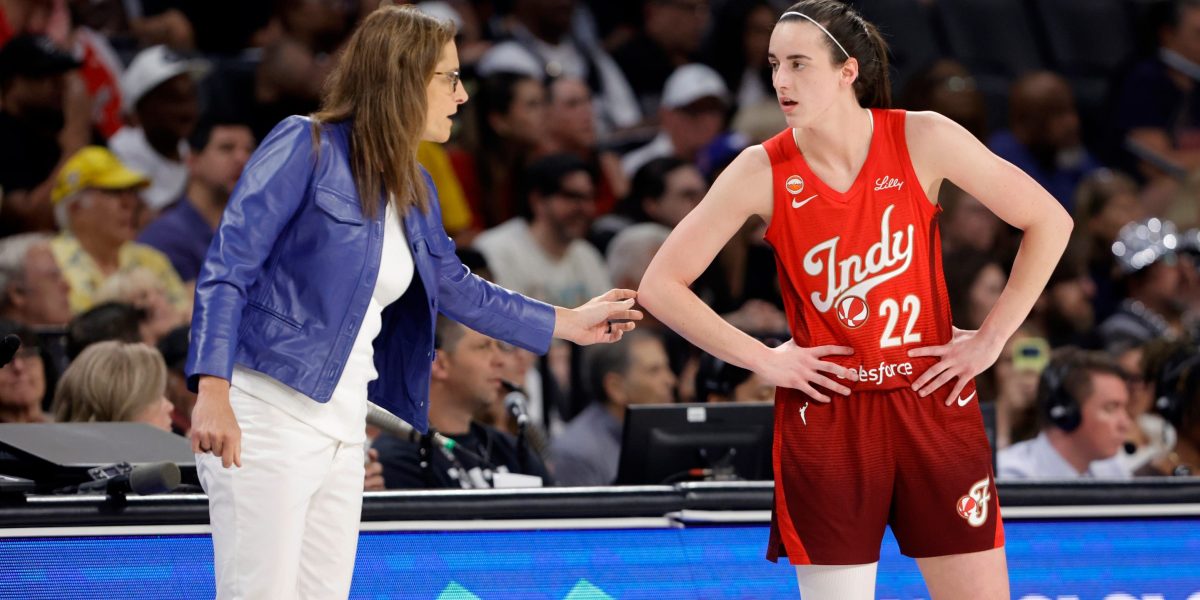
Everything looked different.
Team USA opened well and built a 19–8 first-quarter advantage.
For several minutes, another comfortable American victory appeared likely.
Italy refused to cooperate with that expectation.
The defense tightened.
The pace slowed.
Team USA’s shooting collapsed.
The Americans struggled to generate clean offense against a disciplined Italian group that continued shrinking the margin.
By the fourth quarter, Italy had done something few expected.
It took the lead.
Team USA eventually escaped, but the final statistics revealed just how difficult the game had become.
The Americans shot only 16-for-56 from the field.
That was roughly 29 percent.
They made only one three-pointer in 12 attempts.
They also committed 14 turnovers while recording just 11 assists.
Those numbers were dramatically different from the free-flowing offense seen against China.
Clark’s individual performance reflected that same collapse.
After her historic opening game, she finished against Italy with only one point.
She went zero-for-six from the field.
She did not make a basket.
That stat line naturally became one of the biggest headlines surrounding Team USA.
But focusing only on Clark would miss the larger problem.
The entire American offense struggled.
Breanna Stewart reportedly shot one-for-nine.
Team USA barely generated perimeter scoring.
Possessions became slower and more difficult.
Italy controlled large stretches of the game through discipline rather than superior individual talent.
Clark was part of the problem.
She was not the entire problem.
That distinction matters.
A one-point performance does not erase a 14-point, 11-assist debut.
It also should not be ignored simply because Clark is one of the most popular players in basketball.
Both games belong in the evaluation.
Against China, Clark showed the ceiling.
Against Italy, she showed the limitations that can appear when her shot disappears and Team USA cannot establish pace.
That contrast now gives head coach Cara Lawson a much more useful set of information.
The question is no longer simply whether Clark deserves to start.
The deeper question is how Team USA should use her when the game becomes slow, physical, and uncomfortable.
Clark’s value does not depend only on scoring.
Her most important skill may be the way she changes offensive structure.
She pushes transition opportunities.
She sees passing angles early.
She stretches defenses from deep range.
She can create easier shots before defenders completely organize.
Those qualities were obvious against China.
They were much harder to access against Italy.
The source repeatedly asks whether Team USA ever truly gave Clark control of the offense during the difficult stretches.
That is a legitimate basketball question.
If Clark is on the floor but rarely initiating, Team USA may not be accessing the qualities that make her most valuable.
That does not mean Lawson mishandled her deliberately.
There is no evidence in the source establishing any hidden agenda.
Coaches balance multiple concerns.
They consider defense.
They consider experience.
They consider matchups.
They consider which lineup has already earned trust.
The important question is whether the rotation responded quickly enough when the original plan stopped working.
Team USA’s veteran core eventually saved the game.
Jackie Young finished with 10 points and made important plays late.
Chelsea Gray reportedly hit a critical shot.
Stewart scored the basket that moved the Americans back in front.
That experience mattered.
It is one reason Lawson cannot simply abandon veterans after one difficult performance.
The same veterans who struggled early helped close the game.
That is exactly why the lineup debate is more complicated than social media often makes it.
Clark is not automatically the answer to every offensive problem.
Gray is not automatically the obstacle.
Bueckers is not automatically entitled to more minutes.
Reese is not automatically the missing piece.
Tournament basketball is about combinations.
Team USA’s challenge is discovering which combinations work against different styles.
Italy offered a warning about what happens when the Americans cannot impose their preferred tempo.
The game became a half-court grind.
Shots became harder.
Passing windows disappeared.
Physical contact increased.
That type of basketball will appear again.
France, Australia, Spain, and other strong teams can create similar problems.
Team USA cannot assume that raw talent will automatically solve them.
That is where Clark becomes interesting again.
A player with her range can force a defense to expand.
A player with her passing vision can punish aggressive pressure.
A player who advances the ball quickly can attack before a half-court defense settles.
Those advantages remain useful even after a zero-for-six shooting night.
But they must be incorporated deliberately.
Clark does not need to score 25 points to matter.
Her opening game already proved that.
Eleven assists can be just as destructive as a high scoring total.
They turn teammates into easier scoring threats.
That is why Lawson’s next decision should not revolve around whether Clark had a bad game.
It should revolve around usage.
Was she touching the ball enough?
Was she being used as a primary creator?
Was she entering with lineups suited to her strengths?
Was Team USA spacing the floor properly around her?
Those questions matter more than the word “starter.”
Starting carries symbolic importance.
Closing carries competitive importance.
A player can come off the bench and still control the most meaningful possessions of a game.
Lawson could keep the same starting five and still expand Clark’s responsibility significantly.
That may be the most practical short-term adjustment.
It preserves veteran continuity.
It also gives Team USA more opportunities to use Clark when the offense stalls.
The Italy game also showed why this cannot become a Caitlin Clark-only story.
Paige Bueckers is another major offensive weapon.
Angel Reese provides rebounding and physicality.
The veteran core provides experience that cannot be recreated instantly.
Team USA’s strength is not one star.
It is depth.
The coaching challenge is converting that depth into functional lineups.
That becomes harder when almost every player is accustomed to major responsibility with her WNBA team.
Someone has to sacrifice touches.
Someone has to come off the bench.
Someone has to defend more and shoot less.
That is normal on national teams.
The players who adapt fastest become invaluable.
Clark adapted beautifully against China.
Against Italy, the adjustment was much harder.
That is not a contradiction.
It is basketball.
The source also connects the story to comments previously made by NBA commissioner Adam Silver.
Silver reportedly said it was unfair that Clark had become a political football.
He argued that the conversation surrounding her had grown far beyond basketball.
That observation feels particularly relevant after the Italy game.
Clark scores 14 points and delivers 11 assists, and the entire sport debates whether she should start.
She scores one point, and the entire sport debates whether Team USA is mishandling her.
Every performance becomes evidence for someone’s preferred argument.
That creates an unhealthy temptation.
Supporters may excuse every bad performance.
Critics may treat every bad night as proof she is overrated.
Neither approach produces serious analysis.
The better standard is consistency.
Clark should be evaluated like every other elite player.
Good games matter.
Bad games matter.
Role matters.
Matchup matters.
Team performance matters.
That is also why blaming Clark for the entire 55–52 struggle makes little sense.
Team USA scored only 55 points.
The Americans shot under 30 percent.
The three-point offense nearly disappeared.
Multiple stars struggled simultaneously.
Clark’s zero-for-six performance contributed to the problem.
It did not create the problem by itself.
The more useful question is how Team USA responds collectively.
Lawson acknowledged afterward that her group needs to learn how to win when it does not have its best offensive performance.
That is an important championship lesson.
Great teams do not always dominate.
Sometimes they survive.
The Americans survived Italy.
That matters.
But survival should not hide warning signs.
The knockout rounds will punish repeated 29 percent shooting performances.
A stronger opponent may not allow Team USA to recover after losing the lead in the fourth quarter.
The margin for error will shrink.
The rotation must become sharper.
The offense must become more reliable.
Clark must become more comfortable within that structure.
That is where the next few games become critical.
If she comes off the bench and immediately returns to high-level playmaking, the pressure for a larger role will grow.
If Lawson starts her and the offense improves dramatically, the conversation changes again.
If Clark has another quiet performance, Lawson’s cautious approach becomes easier to defend.
Every possession now carries additional scrutiny.
That is the reality of Clark’s popularity.
The spotlight follows her even when she is not scoring.
That spotlight also affects the WNBA.
The source notes that commissioner Cathy Engelbert plans to retire at the end of 2026.
That means the league is approaching a leadership transition during a period of enormous growth.
The next commissioner will inherit larger audiences, more revenue opportunities, greater expansion ambitions, and far more scrutiny than the league faced only a few years ago.
Clark will remain central to that environment.
She is one of the most important reasons casual sports viewers are paying attention to women’s basketball.
That does not mean the sport revolves entirely around her.
It means her influence cannot be ignored.
Every foul involving Clark becomes debate.
Every lineup decision becomes content.
Every good game becomes proof of greatness.
Every bad game becomes ammunition for critics.
That is the media reality surrounding her.
Team USA cannot control that attention.
It can control the basketball.
That should be Lawson’s focus.
The Americans do not need to satisfy millions of Clark fans.
They do not need to protect veteran reputations.
They need to maximize their chances of winning gold.
If Clark gives them the best offensive structure, her role should grow.
If another lineup provides better balance, Lawson should use it.
That standard should remain simple.
What helps Team USA win?
The Italy game made the answer less obvious.
That may ultimately be useful.
China showed the best version of Clark.
Italy showed the difficult version.
Now Lawson can evaluate both.
This is why one poor game should not create panic.
It should create adjustment.
Clark is still one of the most talented offensive players on the roster.
Her passing remains elite.
Her range remains unusual.
Her pace remains valuable.
Those skills did not disappear because six shots missed.
At the same time, Team USA cannot assume those skills will automatically translate without structure.
The coaching staff must create opportunities for them.
That responsibility belongs to both player and coach.
Clark must adapt to international physicality.
Lawson must determine how to place her in lineups where her strengths matter most.
The next chapter will reveal whether Team USA can find that balance.
The Americans are still undefeated.
They are still advancing.
They still possess one of the deepest rosters in the tournament.
Nothing about the Italy scare changes that.
But Italy proved something important.
Team USA is not invincible.
One bad quarter can become dangerous.
One bad shooting night can erase a talent advantage.
One disciplined opponent can turn a favorite into a desperate team searching for answers.
That is why Caitlin Clark’s one-point game matters.
Not because it disproves her opening performance.
Not because it proves she should be benched.
It matters because it forces Team USA to answer the hardest version of the Caitlin Clark question.
How do you maximize her when everything is going wrong?
Against China, the answer looked easy.
Against Italy, it did not.
The gold-medal path may depend on solving that problem before the games become even less forgiving.
