
Team USA survived one of the most uncomfortable nights of its recent FIBA Women’s Basketball World Cup history, escaping Italy with a 55-52 victory that raised more questions than celebrations.
The Americans preserved their winning streak, but almost everything about the performance felt different from their explosive opening victory over China.

The offense slowed.
Shots stopped falling.
Spacing disappeared.
And Caitlin Clark, only days removed from a sensational World Cup debut, spent large stretches of the game watching from the bench.
That contrast immediately fueled another national-team controversy.
Why did Team USA move away from the fast, aggressive style that had worked so effectively against China?
And why did Kara Lawson continue relying heavily on veteran combinations while younger lineups appeared to produce better offensive rhythm?
Those questions became impossible to ignore after Italy remained within one possession during the closing seconds.
TEAM USA ESCAPES WITH A 55-52 WIN.
The final score was startling.
USA 55.
Italy 52.
According to the source, it represented the lowest scoring total in a Team USA World Cup victory since 1971.
Even more troubling was how close the Americans came to overtime.
Italy’s Cecilia Zandalasini had an opportunity late in the game to potentially extend the contest.
The shot did not fall.
Team USA survived.
But survival was not what most observers expected from a roster overflowing with WNBA stars and elite young talent.
Only days earlier, the Americans had dismantled China.
Against Italy, they looked vulnerable.
CAITLIN CLARK’S ROLE SHRINKS DRAMATICALLY.
Clark’s individual stat line looked nothing like her performance against China.
She played approximately 18 minutes.
She scored only one point.
That was a dramatic decline after her 14-point, 11-assist, zero-turnover World Cup debut.
But raw scoring does not explain the entire debate.
The controversy centered on how Team USA played when Clark and several younger teammates shared the floor.
According to the source, the Americans were leading just 8-6 when Clark entered during the first quarter.
She joined a group featuring Paige Bueckers, Aaliyah Boston, Angel Reese and Rhyne Howard.
The pace changed quickly.
THE YOUNG LINEUP BUILDS THE FIRST REAL SEPARATION.
The source says the score moved from 8-6 to 17-8 during that stretch.
That was the clearest early separation Team USA created.
The difference was not simply shot-making.
The ball moved faster.
Players attacked earlier in the possession.
Dribble penetration created kick-out opportunities.
Shooters received the basketball in rhythm.
Italy’s defense had less time to organize.
The lineup’s success immediately invited comparisons with the China game.
Against China, Clark had accelerated possessions and repeatedly created advantages before the defense could settle.
Against Italy, similar principles briefly appeared again.
Then the rotation changed.
THE VETERAN LINEUP SLOWS THE GAME.
The source argues that Lawson replaced the younger group with a veteran-heavy lineup led by Chelsea Gray.
The offensive rhythm changed.
Possessions became slower.
Team USA spent more time operating against Italy’s fully established half-court defense.
That played directly into Italy’s strategy.
Italy packed the paint.
The defenders stayed disciplined.
They challenged Team USA to beat them from the perimeter.
The Americans could not.
According to the transcript, Team USA shot approximately 29 percent from the field.
From three-point range, the Americans reportedly made only one of 12 attempts.
That kind of shooting can destroy any offensive game plan.
ITALY FORCES TEAM USA INTO HALF-COURT BASKETBALL.
Italy deserves considerable credit.
The game was not simply an American failure.
Italy successfully reduced the pace and forced the United States into possessions that required patience and precise execution.
The Italians protected the paint.
They eliminated many transition opportunities.
They forced the Americans toward contested jumpers.
That strategy worked.
A Team USA roster capable of overwhelming opponents in space suddenly found itself struggling to manufacture basic half-court advantages.
That is where the coaching discussion becomes important.
When one offensive style stops working, adjustments must follow.
The source believes Team USA possessed the necessary adjustment but failed to use it consistently enough.
CAITLIN CLARK OFFERS A DIFFERENT TEMPO.
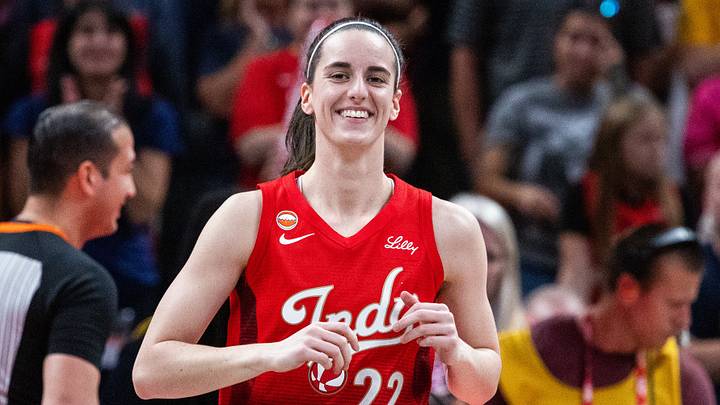
Clark’s greatest offensive value is not necessarily scoring.
It is urgency.
She pushes the basketball before opponents establish preferred defensive positions.
She recognizes gaps quickly.
She moves the ball early.
She encourages teammates to run.
That style naturally creates a different game.
Against a defense such as Italy’s, allowing the opponent to establish five defenders in the half court makes scoring significantly more difficult.
Transition eliminates that comfort.
Even after made baskets, Clark often wants the next possession initiated immediately.
That mentality can prevent defensive structures from becoming completely organized.
PLUS-MINUS ADDS FUEL TO THE ROTATION DEBATE.
The transcript repeatedly emphasizes plus-minus statistics.
Clark reportedly finished at plus-six.
Bueckers was plus-seven.
Howard was plus-five.
Boston led Team USA at plus-18.
Those figures stood out because the final margin was only three points.
Plus-minus is not a perfect individual measurement.
It can be heavily influenced by teammates, opponent lineups and game situations.
Still, when multiple players from one combination post positive numbers while another group struggles, coaches naturally examine the pattern.
The source treats those figures as evidence that the younger lineup deserved significantly more playing time.
AALIYAH BOSTON MAY HAVE BEEN THE MOST IMPORTANT PLAYER.
Boston’s reported plus-18 became one of the most striking statistics in the transcript.
In a game decided by only three points, being plus-18 while on the floor suggests Team USA performed substantially better during her minutes.
The source credits Boston with impacting both ends.
She battled on the glass.
She defended.
She finished opportunities around the basket.
And she benefited when the offense moved quickly enough to prevent Italy from loading the paint.
Boston’s performance also reinforces an important tactical connection.
Clark and Boston already share professional chemistry from Indiana.
They understand each other’s movements.
That familiarity can become extremely useful in short international tournaments.
PAIGE BUECKERS CONTINUES TO FIT WITH CLARK.
Bueckers again emerged as an important part of the younger American group.
Her game naturally complements Clark.
Both can handle.
Both can pass.
Both can shoot.
But their styles are different enough to make them difficult to defend together.
Clark stretches the floor with range.
Bueckers attacks intermediate spaces.
One can initiate while the other relocates.
One can create an advantage while the other finishes it.
Against Italy, the source argues that this combination helped create the kind of movement missing during several veteran-heavy stretches.
That makes the pairing increasingly difficult for Lawson to ignore.
RHYNE HOWARD PROVIDES ESSENTIAL SPACING.
Howard’s shooting is another important part of the offensive equation.
Even when Team USA struggled from three-point range, the threat of Howard still affected defensive positioning.
A shooter does not need to make every attempt to influence spacing.
Defenders must respect the possibility.
That creates room for guards to penetrate.
It also helps big players find opportunities near the basket.
The younger lineup’s strength was not one superstar dominating every possession.
It was balance.
Clark created.
Bueckers attacked.
Howard spaced.
Boston finished.
Reese rebounded.
That combination gave Team USA several ways to create advantages.
ANGEL REESE’S ROLE REMAINS CLEAR.
Reese also fits naturally within the faster group.
She does not need to become a primary playmaker.
Her greatest value comes from physicality, rebounding and second-chance opportunities.
When Clark controls transition, Reese can run directly toward the paint.
When Bueckers attacks gaps, Reese can position herself for rebounds.
When Howard stretches defenders outward, Reese receives additional interior space.
That is role clarity.
And role clarity is exactly what the source believes Team USA lacked during the Italy game.
CHELSEA GRAY BECOMES THE CENTER OF AN UNCOMFORTABLE DISCUSSION.
The veteran-versus-youth framing inevitably places Chelsea Gray under scrutiny.
Gray has earned enormous respect throughout her career.
She has championship experience.
She has played in major international games.
She understands half-court execution at an elite level.
None of that disappears because Team USA struggled against Italy.
But experience cannot become the only factor.
Current performance matters.
Fit matters.
Matchups matter.
If Italy’s strategy was to slow the game and pack the paint, Team USA had to decide whether matching that slow tempo was actually advantageous.
The source strongly argues that it was not.
THE GAME AGAINST CHINA MADE THE CONTRAST SHARPER.
Only days earlier, Clark produced one of the most impressive performances of the tournament.
She finished with 14 points, 11 assists and zero turnovers against China.
The source also describes multiple record-related achievements from that debut.
More importantly, Team USA played with pace.
The ball moved.
Players received easier opportunities.
China’s size became less effective because the Americans did not allow its interior defenders to remain comfortable.
That performance appeared to provide a blueprint.
Fast possessions.
Early passing.
Multiple creators.
Spacing.
Movement.
Against Italy, Team USA repeatedly moved away from that blueprint.
That created frustration among fans.
THE “ANTI-CLARK PLAN” CLAIM GOES TOO FAR WITHOUT EVIDENCE.
The source video describes Lawson’s strategy as an “anti-Caitlin Clark plan.”
That is a dramatic interpretation.
The available evidence does not prove Lawson intentionally designed a system to suppress Clark.
Coaches make rotation decisions for many reasons.
Matchups matter.
Fatigue matters.
Tournament management matters.
Veteran experience matters.
Lawson may simply believe Team USA needs multiple styles to win a championship.
The legitimate question is whether that philosophy worked against Italy.
On that night, the answer looked uncertain.
Criticizing the strategy is fair.
Assigning personal motives requires stronger evidence.
LAWSON’S POSTGAME EXPLANATION DESERVES CONSIDERATION.
According to the transcript, Lawson emphasized veteran leadership and the importance of learning to win in different ways.
That philosophy has merit.
Championship teams cannot survive on one style alone.
There will be games when transition disappears.
There will be games where three-point shots stop falling.
There will be opponents capable of forcing Team USA into ugly half-court battles.
A champion must know how to survive those nights.
Italy may have provided exactly that kind of lesson.
The problem is how close the lesson came to becoming a defeat.
WINNING UGLY CAN BE VALUABLE.
There is value in uncomfortable victories.
A 30-point blowout teaches one set of lessons.
A three-point escape teaches another.
Players learn how to execute under pressure.
Coaches identify weaknesses.
Rotations are tested.
Communication is exposed.
Team USA now knows that simply possessing more talent does not guarantee comfortable victories.
That realization could become useful later in the tournament.
But the Americans should not ignore what the Italy game revealed.
The half-court offense requires improvement.
THE STARTING LINEUP QUESTION IS GETTING LOUDER.
Should Clark start?
After China, the argument became stronger.
After Italy, it becomes even more complicated.
Clark scored only one point against Italy.
But the source argues that her lineup combinations were among Team USA’s most effective.
That distinction matters.
Point guards influence games without scoring.
If the offense moves better with Clark controlling tempo, Lawson must evaluate that impact beyond individual point totals.
Starting Clark would also create another possibility.
Team USA could establish pace immediately instead of attempting to introduce it later.
Against disciplined opponents, those opening possessions could matter enormously.
THE YOUNGER GROUP MAY BE MORE THAN A CHANGE-OF-PACE UNIT.
Clark, Bueckers, Boston, Reese and Howard were initially easy to describe as an energetic second unit.
The source argues that description may now be outdated.
If that lineup repeatedly creates separation, perhaps it deserves greater responsibility.
That does not mean all five must automatically start.
Lineups are about combinations.
Some younger players may work better beside veterans.
Some veterans may become more effective alongside Clark.
Lawson’s job is not to choose generations.
It is to find combinations.
The Italy game simply provided more evidence about which combinations deserve examination.
THE “OLD GUARD VS NEW GUARD” THEORY IS TEMPTING BUT UNPROVEN.
Fans naturally create larger narratives.
Veterans protecting hierarchy.
Younger stars demanding control.
Coaches favoring familiar players.
The source even raises Lawson and Gray’s shared Duke background.
Those connections are factual.
The conclusion that they determine Team USA’s rotations is not established.
Familiarity can influence trust.
That is normal coaching behavior.
But familiarity is not automatically favoritism.
The strongest criticism remains tactical.
Did the veteran-heavy lineup give Team USA its best chance to separate from Italy?
The source believes the answer was clearly no.
That argument can be debated using basketball evidence alone.
FRANCE AND OTHER ELITE TEAMS WILL NOT OFFER THE SAME MARGIN.
The source warns that tougher opponents may punish the same weaknesses more severely.
That is a fair concern.
Elite international teams will defend with discipline.
They will scout every American weakness.
They will understand which combinations struggle to create spacing.
They will attack stagnant possessions.
Against Italy, Team USA survived.
Against a championship contender, a similar performance could become elimination.
That is why group-stage games matter beyond the standings.
They provide information.
Lawson now has considerably more information than she had before the tournament began.
TEAM USA MUST FIND BALANCE BETWEEN PACE AND CONTROL.
The answer does not have to be completely fast or completely slow.
Championship offenses need both.
Clark can push transition.
Gray can manage difficult half-court possessions.
Bueckers can attack late-clock gaps.
Stewart can create from multiple positions.
Boston can screen and roll.
Howard can stretch defenses.
Reese can dominate the glass.
The ideal system combines those strengths.
The mistake would be forcing every possession into one predetermined style.
Italy demonstrated why adaptability matters.
CLARK DOES NOT NEED 30 POINTS TO MATTER.
One point looks ugly in a box score.
It does not automatically mean Clark played poorly.
Point guards can influence spacing, pace and decision-making without scoring.
The source’s plus-minus discussion reinforces that idea.
If Team USA consistently creates better possessions during Clark’s minutes, her value extends beyond points.
That is particularly important on a roster filled with scorers.
Clark does not need to become the leading scorer every night.
She can become the player who makes everyone else more efficient.
That role may ultimately be more valuable.
LAWSON’S BIGGEST CHALLENGE IS TRUSTING WHAT THE GAME REVEALS.
Tournament coaching demands flexibility.
A plan created before the opening tip cannot become sacred.
If one lineup struggles, change it.
If another lineup creates separation, examine why.
If a player unexpectedly becomes essential, increase her responsibility.
The Italy game gave Lawson several clues.
Boston’s impact was significant.
The younger group showed energy.
Clark’s pace created movement.
The veteran group faced difficulties generating clean offense.
Those observations should influence future decisions.
That is not abandoning experience.
It is coaching.
A THREE-POINT WIN CAN STILL BECOME A VALUABLE WARNING.
Team USA did not lose.
That matters.
The Americans preserved the streak.
They survived a difficult shooting night.
They learned what happens when the pace disappears.
And they discovered that Italy could challenge them physically and tactically.
Sometimes champions need a warning before the most important games begin.
The question is whether Team USA uses it.
If Lawson adjusts intelligently, the Italy scare may eventually be remembered as useful adversity.
If the same offensive problems continue, the game could become a preview of something more dangerous.
CAITLIN CLARK REMAINS AT THE CENTER OF THE DEBATE.
Clark’s World Cup story has changed dramatically within only a few days.
Against China, she looked sensational.
Against Italy, she barely scored.
Yet the conversation around her role became even louder.
That tells us something.
Clark’s value is no longer measured simply by individual statistics.
The debate is about structure.
Who controls the offense?
How fast should Team USA play?
Which lineups create the best spacing?
Which players complement one another?
Those questions will determine whether Clark starts.
They may also determine how dominant Team USA becomes.
TEAM USA WON, BUT THE EXPERIMENT IS NOT OVER.
The final score reads 55-52.
History will record another American victory.
But the box score cannot completely describe what happened.
Italy exposed weaknesses.
Team USA’s shooting disappeared.
The offense became stagnant for significant stretches.
The younger lineup provided energy.
The veteran group struggled to consistently build separation.
Clark remained a central tactical question.
Lawson now faces a decision.
Does she continue relying heavily on veterans because she wants Team USA prepared to win ugly?
Or does she lean further into the pace, movement and creativity produced by Clark, Bueckers, Boston, Reese and Howard?
There is no need to frame that decision as personal warfare.
It is basketball.
And basketball eventually rewards the combinations that consistently work.
Team USA escaped Italy.
The next opponent may not be so forgiving.
That makes the next lineup card more than a routine coaching decision.
It becomes evidence.
Evidence of whether Lawson believes the narrow victory proved her philosophy correct.
Or evidence that the 55-52 scare convinced Team USA to evolve before the World Cup becomes considerably less forgiving.
